
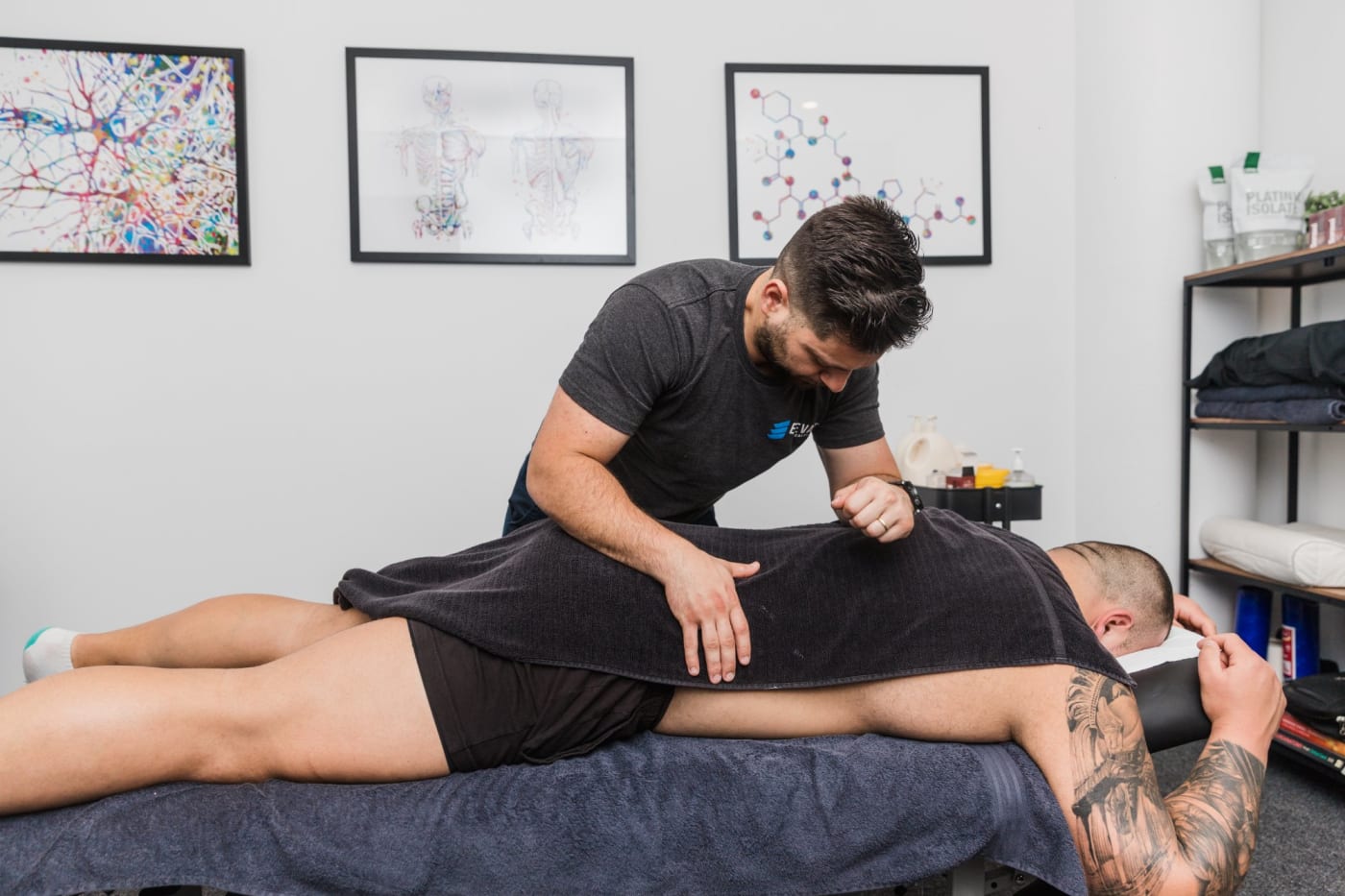
Many patients who come through our doors in Bella Vista have had hands-on treatment before — chiropractic adjustments, physiotherapy, massage — that provided relief for a while before their symptoms returned. They come back asking the same question: why isn't it sticking?
It is a question worth exploring honestly. Hands-on treatment has genuine value in the management of musculoskeletal pain. Understanding where it fits — and where it has limitations — helps patients get the most from their care.
Key points from this article:
- Manual therapy has good evidence for short-term pain reduction in many musculoskeletal conditions
- Long-term outcomes are generally better when hands-on treatment is combined with active rehabilitation
- The goal of evidence-based care is to progressively reduce dependence on passive treatment
- Some ongoing maintenance care can be appropriate — but should be part of a considered plan
What Manual Therapy Does Well
Manual therapy — the umbrella term for hands-on techniques including spinal manipulation, joint mobilisation, soft tissue therapy and dry needling — has meaningful evidence supporting its use in a range of musculoskeletal presentations.
Short-Term Pain Reduction
Clinical guidelines and systematic reviews consistently support manual therapy for reducing pain in the short term. For acute back pain, neck pain, headaches and many joint conditions, hands-on treatment can produce rapid and meaningful reductions in pain that allow patients to begin active rehabilitation earlier and more comfortably.
Restoring Movement
Restricted joint movement — whether from muscle guarding, joint stiffness or post-injury changes — often responds well to manual therapy. Restoring movement is not just about comfort; it facilitates the movement-based rehabilitation that follows.
Neurophysiological Effects
The mechanisms behind manual therapy are increasingly understood to involve the nervous system, not just the joints and muscles. Spinal manipulation, for example, produces measurable changes in pain sensitivity and muscle activity that go beyond the simple mechanical "realignment" narrative that was historically offered as an explanation.
Where Manual Therapy Has Limitations
The picture changes when we look at longer-term outcomes. Several large reviews have found that manual therapy alone — without an active component — produces less durable results than when it is combined with exercise and rehabilitation.
This makes biological sense. Hands-on treatment can reduce pain and improve movement in the short term. But it does not directly build the muscle strength, joint load tolerance or movement confidence that protect against recurrence. If you return to the same demands — the same desk job, the same training load, the same movement patterns — without having built greater capacity, the same stressors will produce the same result.
The patient who comes in for treatment every few weeks and feels good for a few days before returning to their baseline has not been poorly treated — but they may not have received the full package of care that evidence suggests would serve them best.
What Evidence-Based Care Usually Looks Like
The most effective models of care for musculoskeletal pain typically combine passive and active elements, with the balance shifting toward active rehabilitation over time.
Early Phase
In the acute or early stages, hands-on treatment often takes a more prominent role. The priority is reducing pain, restoring movement and getting the patient back to a level where active rehabilitation is comfortable. This might involve spinal manipulation, joint mobilisation, soft tissue techniques and pain education.
Rehabilitation Phase
As pain settles, the focus shifts toward building capacity — through progressively loaded exercise, motor control work and load tolerance training. Hands-on treatment may continue, but as a support to the active component rather than the primary intervention. Our exercise physiology team works closely with our chiropractic and physiotherapy clinicians to bridge this phase.
Self-Management Phase
The goal of evidence-based rehabilitation is to give you the tools to manage your own condition. This means developing the strength, movement confidence and self-management strategies to maintain your outcomes independently — and to manage any future flare-ups without requiring a full return to frequent treatment.
Is Ongoing Maintenance Care Appropriate?
Some patients find that periodic hands-on treatment — monthly or bi-monthly — helps them manage their condition over the long term. This can be appropriate for certain presentations, particularly those involving complex or longstanding conditions.
The key distinction is whether maintenance care is part of a considered, planned approach to managing a specific condition, or whether it reflects a pattern of dependency that has developed in the absence of adequate active rehabilitation.
At Elevate Health Clinic, we aim to be clear with patients about where they are in their rehabilitation journey and what the goal of ongoing treatment is. If you have been having regular treatment without a clear plan for progressing your self-management capacity, it is worth discussing this with your clinician.
Frequently Asked Questions
Does hands-on treatment work for back pain?
Manual therapy has good evidence for reducing pain and improving function in both acute and chronic back pain. It tends to be most effective when combined with active rehabilitation rather than used as a standalone treatment.
How long does manual therapy take to work?
Many patients report meaningful improvement in pain and movement after the first few sessions. For longer-term outcomes, the active component of rehabilitation — exercise and load progression — is generally what maintains the gains made during hands-on treatment.
Should I keep going back to my chiropractor or physio indefinitely?
Indefinite passive treatment is generally not the goal of evidence-based care. A well-structured rehabilitation plan should work toward reducing dependence on hands-on treatment over time — giving you the tools to manage your own condition.
References
- Rubinstein SM, et al. (2019). Spinal manipulative therapy for acute low back pain: an update of the Cochrane review. Spine, 44(15), e882–e900.
- Paige NM, et al. (2017). Association of spinal manipulative therapy with clinical benefit and harm for acute low back pain: systematic review and meta-analysis. JAMA, 317(14), 1451–1460.
- Bialosky JE, et al. (2009). The mechanisms of manual therapy in the treatment of musculoskeletal pain: a comprehensive model. Manual Therapy, 14(5), 531–538.
- Coulter ID, et al. (2018). Manipulation and mobilization for treating chronic low back pain: a systematic review and meta-analysis. Spine Journal, 18(5), 866–879.
Need guidance? Our team at Elevate Health Clinic in Bella Vista can help. Book an appointment online or call us on (02) 8883 0178.
Ready to take the next step?
Book an appointment with our experienced team, same-day availability, NDIS, WorkCover & private health welcome.
Book an Appointment