
Scoliosis is a condition in which the spine curves abnormally to the side — often in an S or C shape when viewed from behind. While the word sounds alarming, the majority of cases are mild and manageable with conservative care.
What Is Scoliosis?
Scoliosis is defined as a lateral (sideways) curvature of the spine greater than 10 degrees, as measured by the Cobb angle on X-ray. In most cases there is also a rotational component, which can cause a visible rib hump or asymmetrical waist. It affects approximately 3% of the Australian population, most commonly appearing during the adolescent growth spurt (10–14 years).
Types of Scoliosis
- Idiopathic scoliosis (80% of cases): No known cause. Adolescent idiopathic scoliosis (AIS) is the most common form.
- Congenital scoliosis: Present from birth due to abnormal vertebral development.
- Neuromuscular scoliosis: Caused by conditions affecting muscles or nerves, such as cerebral palsy.
- Degenerative scoliosis: Develops in adults due to asymmetric disc and joint degeneration — increasingly common over 50.
How Chiropractic Helps Scoliosis
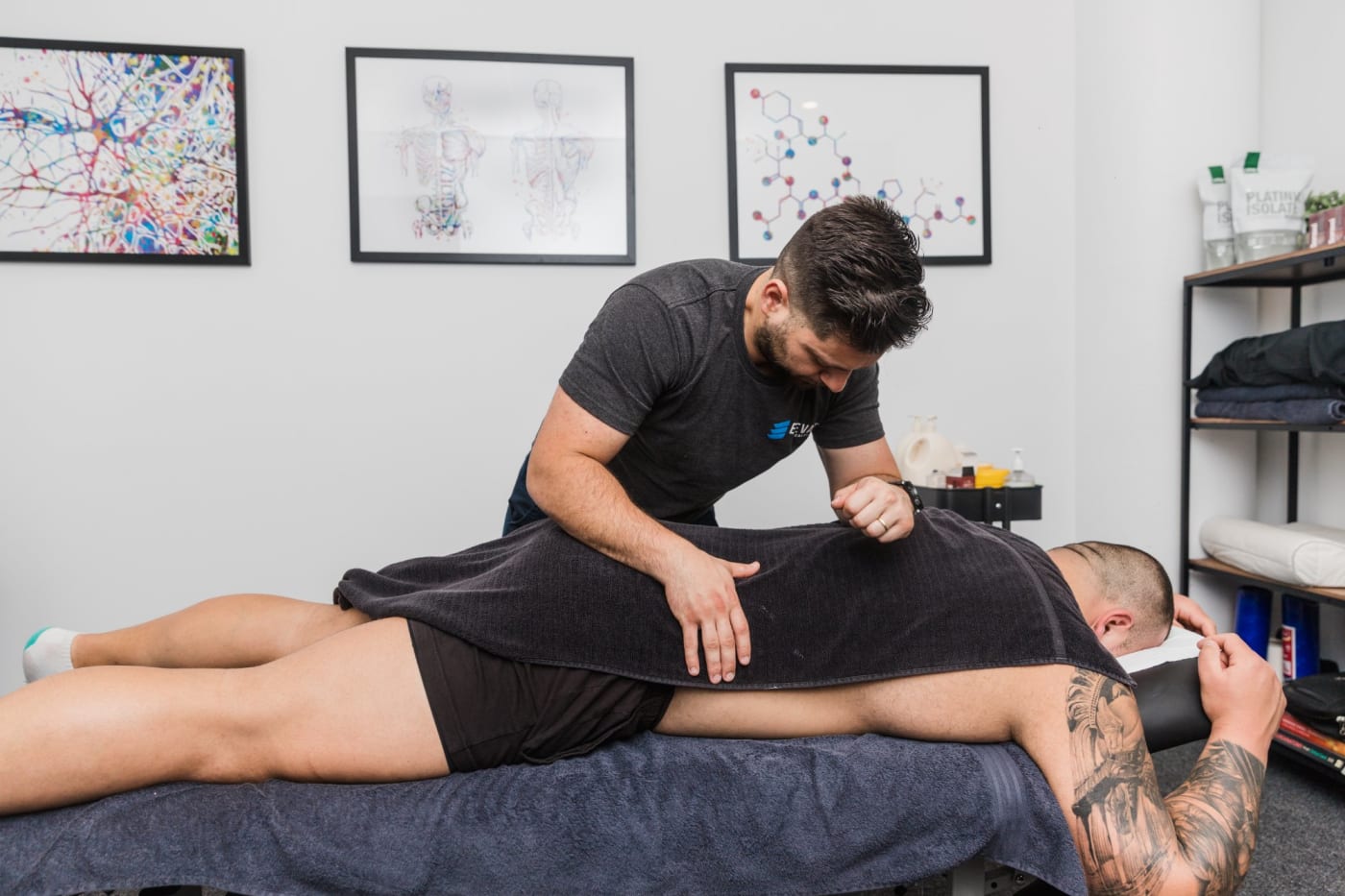
Chiropractic care cannot straighten a scoliotic curve, but it can manage symptoms, maintain joint mobility and reduce pain through spinal adjustments targeting restricted segments, soft tissue therapy to chronically tight muscles, and rib cage mobilisation.
Exercise Physiology for Scoliosis
Specific scoliosis exercises — particularly the Schroth method — have strong evidence for reducing progression in adolescents and improving pain and function in adults. Our exercise physiologists design individualised programs incorporating Schroth-based exercises, asymmetric strengthening and core stability training adapted for scoliotic posture.
When Is Intervention Required?
- Under 25°: Observation and exercise therapy
- 25–45° in skeletally immature patients: Conservative bracing to prevent progression
- Over 45–50°: Spinal fusion for severe, progressive curves
Need help with this? Our team at Elevate Health Clinic in Bella Vista and Earlwood can assess and treat this condition. Book online or call us today.
Scoliosis Assessment — What Clinicians Look For
Scoliosis assessment involves more than measuring the curve on an X-ray. A thorough clinical assessment will examine posture from the front, side and back — looking for shoulder height asymmetry, rib prominence, pelvic tilt and the characteristic forward trunk rotation seen when bending forward (the Adams forward bend test). This forward-bend test is the most reliable clinical screening tool for scoliosis and is used in school screening programmes across Australia.
Once scoliosis is identified clinically, X-ray measurement of the Cobb angle confirms the degree of curvature and guides management decisions. Key factors influencing management include: the Cobb angle, the patient's skeletal maturity (measured by the Risser grade), the location of the curve (thoracic, lumbar or thoracolumbar), and whether the curve is progressing. These factors are assessed together — not in isolation.
The Role of Exercise in Scoliosis Management
Scoliosis-specific exercise programmes — particularly SEAS (Scientific Exercise Approach to Scoliosis) and Schroth Method — have the strongest evidence base among conservative approaches for idiopathic scoliosis. These programmes use active self-correction strategies and specific postural exercises to address the three-dimensional nature of the spinal curve. Evidence from systematic reviews suggests they can reduce curve progression, improve posture and reduce pain — particularly in adolescents during the growth phase.
General strength training is also valuable, particularly for adult patients managing the postural fatigue and muscle imbalances associated with scoliosis. Strengthening the paraspinal muscles, core stabilisers and gluteal musculature reduces the asymmetric loading through the spine that exacerbates symptoms over time. Our exercise physiology team designs progressive programmes tailored to the specific curve pattern and functional deficits of each patient.
Living Well with Scoliosis
For the majority of people with scoliosis — particularly mild to moderate curves in skeletally mature patients — the condition is manageable and need not significantly limit daily function, work or sport. The key principles are: maintain physical activity (particularly strength and cardiovascular fitness), address musculoskeletal symptoms as they arise, attend regular monitoring reviews if the curve is in a progression-susceptible range, and avoid prolonged static postures that load the spine asymmetrically.
Swimming, cycling, yoga and pilates are commonly recommended because they promote spinal mobility and strength without significant compressive loading. High-impact sports and heavy axial loading (e.g. heavy barbell squats with a significant thoracic curve) may need to be modified — but rarely need to be avoided altogether. A clinician can provide specific guidance based on your curve pattern and activity goals.
Scoliosis Management at Elevate Health Clinic
Our team at Elevate Health Clinic in Bella Vista provides integrated assessment and management for scoliosis patients across the Hills District. Our chiropractors address the joint mobility and pain components, while our exercise physiology team designs progressive strengthening programmes to address postural asymmetries and build long-term resilience. If you are managing scoliosis alongside another musculoskeletal complaint, our integrated approach means you receive a single coordinated plan across both disciplines.
If you are managing scoliosis alongside other musculoskeletal complaints, our Bella Vista chiropractic team provides thorough assessment and individualised management plans. Our exercise physiology team can also design progressive strengthening programmes to address the postural and muscular asymmetries associated with scoliosis. For general back pain management, our guide on why back pain keeps coming back covers the factors that contribute to persistent and recurring symptoms.
Frequently Asked Questions
Can chiropractic care fix scoliosis?
Chiropractic care does not correct the structural curvature of scoliosis. However, it may help manage the musculoskeletal symptoms associated with scoliosis — including back pain, muscle tension and restricted movement — and may support function and quality of life alongside other management strategies.
When does scoliosis require treatment?
Management decisions for scoliosis depend on the degree of curvature, the patient's age, skeletal maturity and the presence of symptoms. Curves under 20–25 degrees in skeletally mature patients are often monitored rather than actively treated. Larger or progressing curves may require bracing or surgical assessment. A clinician can help determine the appropriate pathway for your specific presentation.
Is scoliosis painful?
Scoliosis itself does not always cause pain, particularly in adolescents. Adults with scoliosis may experience back pain, muscle fatigue and postural discomfort — often due to the asymmetric loading the curvature places on spinal structures over time. The presence and severity of pain varies considerably between individuals.
References
- Negrini S, et al. (2018). 2016 SOSORT guidelines: orthopaedic and rehabilitation treatment of idiopathic scoliosis during growth. Scoliosis and Spinal Disorders, 13, 3.
- Romano M & Negrini S. (2008). Manual therapy as a conservative treatment for adolescent idiopathic scoliosis. Scoliosis, 3, 2.
- Weinstein SL, et al. (2008). Effects of bracing in adolescents with idiopathic scoliosis. New England Journal of Medicine, 369(16), 1512–1521.
Ready to Get Started?
Book an appointment with our experienced team — same-day availability, NDIS, WorkCover & private health welcome.
Book an Appointment